

(PhotoBucket, 2016)
Ancient Wisdom for Today’s Business World
Aristotle first scribed the text ‘Rhetoric’ in the 4th Century BC. This ancient philosophy outlines the system of persuasion through the use of language, and is still considered today as “the most important single work on persuasion ever written.” (James L. Golden)
It seems surreal to think that our ancient ancestors were contemplating a deeper understanding of human communication, and further to scribing these principles in terms still relevant today. Translated from ‘Rhetoric’ Aristotle describes persuasion.
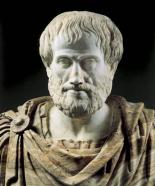
- (Encyclopaedia Brittanica, 2014)
“Persuasion is achieved by the speaker’s personal character when the speech is so spoken as to make us think him credible. [Ethos]
Secondly, persuasion may come through the hearers, when the speech stirs their emotions. [Pathos]
Thirdly, persuasion is effected through the speech itself when we have proved a truth or an apparent truth [Logos] by means of the persuasive arguments suitable to the case in question.”
(Aristotle, 2004)
Persuasion therefore can be summarized as ‘the art of communicating with credibility and appeal to the logic and emotional state of the receiver so as to influence their behavior or opinion.’
This ancient philosophy is as relevant today as it was in 350BC. In today’s business world most communication is to influence publics to achieve a set objective of the organisation. This includes promoting, or gaining support for products or services. (Phillip Cenere, 2015)
Persuasive communication is not only applicable to the publics it serves but is a crucial element of internal communication and motivation for the workforce that drives the business success. Ultimately the success of any organization is dependant on it’s ability to influence in three distinct contexts,
- The workforce that drives the organisation to achieve it’s mission and goals.
- The stakeholders, shareholders and investors that demand success.
- The customers / public that supports or uses the services or products.
(Phillip Cenere, 2015)
Timeless wisdom for modern times.
Reference List
Amadio, A. (2014, January 25). Aristotle – Greek Philosopher. Retrieved March 30, 2016, from Encyclopaedia Brittanica: http://media-2.web.britannica.com/eb-media/84/87984-004-5ADE9ACA.jpg
Aristotle. (2004). Rhetoric (Dover Thrift Editions ed.). (W. R. Roberts, Trans.) New York, USA: Dover Publications.
James L. Golden, G. F. (n.d.). The Rhetoric of Western thought: From the Mediterranean World to the Global Setting (9th ed.). Dubuque, Iowa, USA: Kendall/Hunt Publishing Company.
Phillip Cenere, R. G. (2015). Communication Skills for Business Professionals (First ed.). Port Melbourne, Australia: Cambridge University Press.
PhotoBucket (2016, March 30). Detroit_Panday’s Bucket. Retrieved from PhotoBucket: http://s225.photobucket.com/user/Detroit_Panday/media/books.jpg.html
 SEEKHANA

